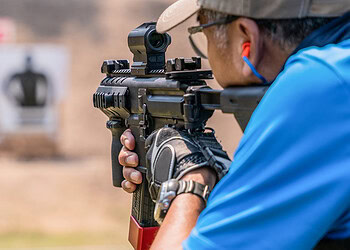
A study published in the American Journal of Psychiatry suggests that a temperament characterized by callousness and a lack of empathy can predict gun use among delinquent adolescents.
Given the widely-reported prevalence of gun violence in the United States, study authors Emily L. Robertson and her colleagues aimed to dig deeper into the motivating factors linking young offenders to gun use.
“Gun violence is a serious public health concern in the United States, with an estimated 133,895 people victimized by gun-related violence in 2017 . . . Given the societal cost and pain and suffering of those affected, reducing gun violence by youths is a critical public health concern,” Robertson and colleagues emphasize.
As previous research has tentatively linked callous-unemotional traits to adolescent gun use, the researchers were particularly interested in examining this personality dimension. According to the authors, callous-unemotional traits include, “limited guilt, reduced empathic concern, reduced displays of appropriate emotion, and a lack of concern over performance in important activities.”
In a study involving 1,215 male youths who had been arrested for the first time, Robertson and team examined whether callous-unemotional traits would predict the carrying of a gun or the use of a gun in a crime.
Within six weeks of their arrest, each youth, between the ages of 13 and 17, completed a baseline measurement of callous-unemotional traits. They were additionally asked how many of their friends owned a gun and how many carried a gun. The adolescents were then reassessed every six months for three years, and then a final time one year later, for a total of seven follow-up assessments.
At the follow-ups, the youth were asked if they had carried a gun since their last assessment. They were also asked if they had “carjacked someone, shot someone, shot at someone, committed armed robbery, participated in gang violence, or killed someone”, and if so, whether they had used a gun during that offense.
The researchers found that youth with elevated callous-unemotional traits were more likely to have carried a gun in the four years following their arrest. They were also more likely to have used a gun during a crime. Importantly, these findings were significant even after controlling for other relevant predictors such as impulse control, parental supervision, exposure to violence, and neighborhood dysfunction.
Next, the researchers explored whether this antisocial temperament would affect participants’ susceptibility to peer gun use. As they expected, peer gun carrying was linked to increased gun carrying but only in those either low or average in callous-unemotional traits.
“Thus,” the researchers infer, “adolescents with elevated callous-unemotional traits appear to carry and use guns at higher rates, regardless of gun carrying and ownership by their peers, consistent with previous research suggesting that these adolescents may be less susceptible to peer influences.”
They further point out that past research may have actually underestimated the influence of peer gun use, given that the majority of youth are low in callous-unemotional traits.
The researchers highlight the implications of their findings, suggesting that interventions targeting gun violence should include methods designed for adolescents with heightened callous-unemotional tendencies. The authors note that their study focused on male youth who were involved in the criminal justice system, and the findings cannot be generalized to young females or to everyday members of the community.
The study, “Callous-Unemotional Traits and Risk of Gun Carrying and Use During Crime”, was authored by Emily L. Robertson, Paul J. Frick, Toni M. Walker, Emily C. Kemp, James V. Ray, Laura C. Thornton, Tina D. Wall Myers, Laurence Steinberg, and Elizabeth Cauffman.
(Photo credit: Geoffrey Fairchild)